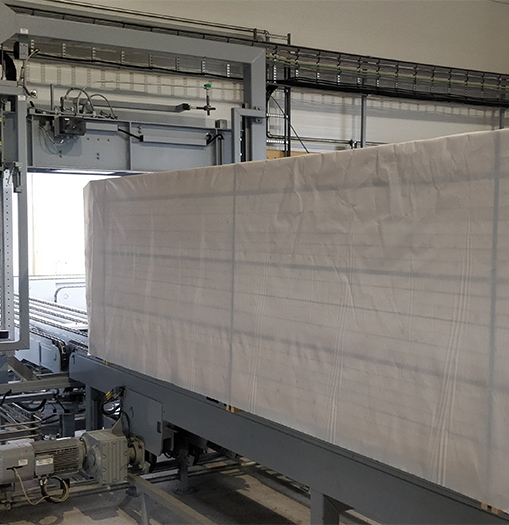
Strapping
The SPRINGER strapping system was specially developed to enable strapping of packages even during longitudinal transport. This solution is primarily used for packages that are already wrapped in film and for packages that no longer need to be compressed from the sides. Die Anzahl und Position der Umreifungen ist variabel wählbar und das Abrollsystem für das Umreifungsband kann um einen Mehrfachabroller oder Abroller mit stehendem Bandrollen erweitert werden.
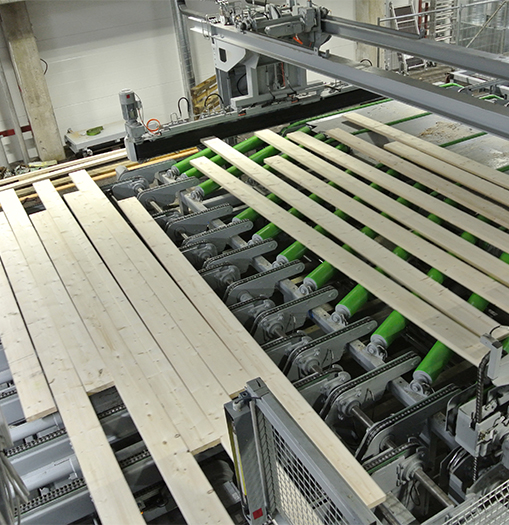
Box stacking
A SPRINGER box stacking layout enables different board lengths to be fed to the stacker section. A uniform package edge is still formed on both sides of the package. The key advantage of this SPRINGER solution is that the drying chambers can be used to maximum efficiency.
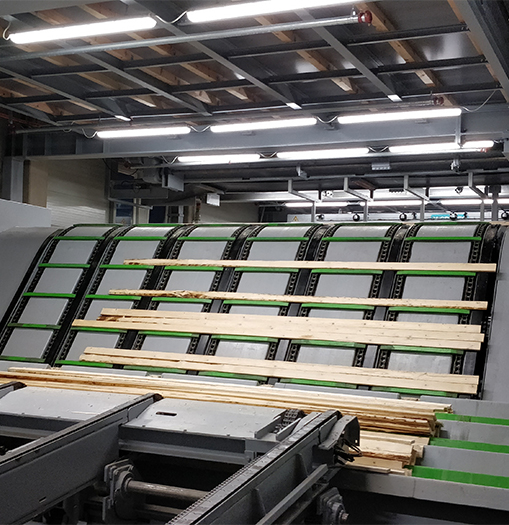
Board unscrambler
The SPRINGER board unscrambler is used to separate the piles of boards which have been fed via the unscrambler trough, so that the boards can be conveyed on in one layer. To ensure that the boards separate as well as possible, an adjustable rail system is automatically positioned according to the thickness of the boards.
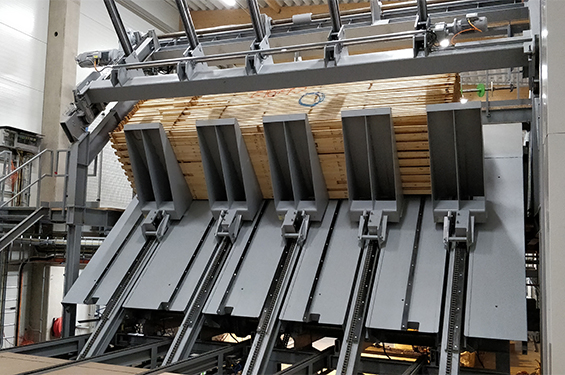
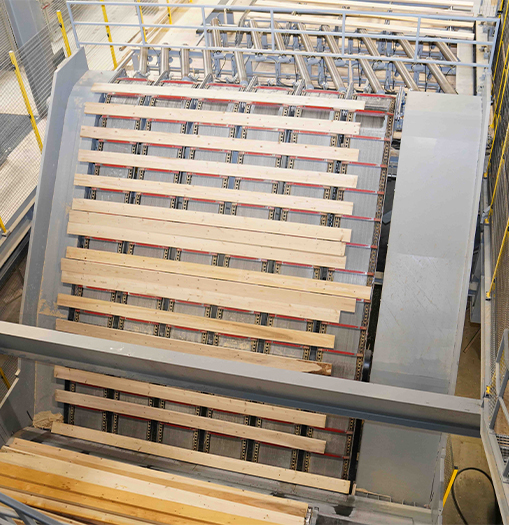
Tilt hoist
SPRINGER tilt tables are very robust and efficient. Add-ons, such as an integrated leveler to prevent the layers from slipping at an angle, a closed rear back to guarantee the position of the sticks is flexible, or a stick loosening screw can increase efficiency even further. In addition, the integration of an auxiliary tilt table to reduce changeover times is possible.
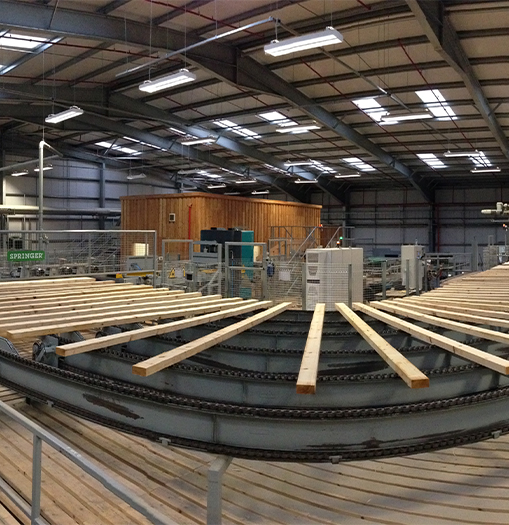
sheet conveyor
Individually adapted to customer requirements: The SPRINGER curved conveyor is used to transport the boards in the sawn timber plant at a certain angle. The angle of the curved conveyor is variable and can be up to 180°, which enables an individual change of direction in the sawn timber sorting.
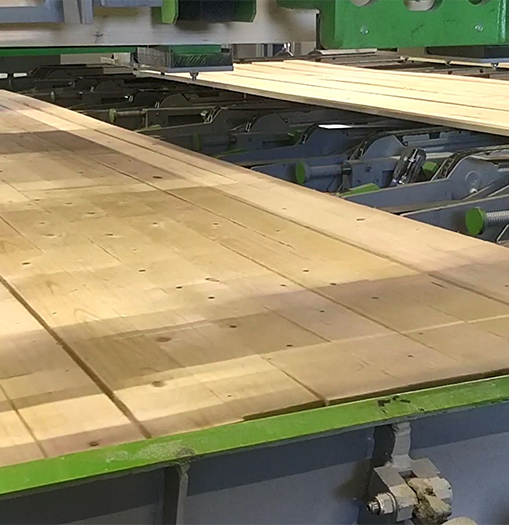
Dual fork stackers
Despite low acceleration, SPRINGER’s dual forks enable high-capacity stacking. While one set of forks transfers the tear to the lift table, the second one is already waiting for the next tear. As soon as the first set of forks moves to the rear, the second set of forks moves the tear to the front. The advantages of this stacking method are very noticeable on dry end side.
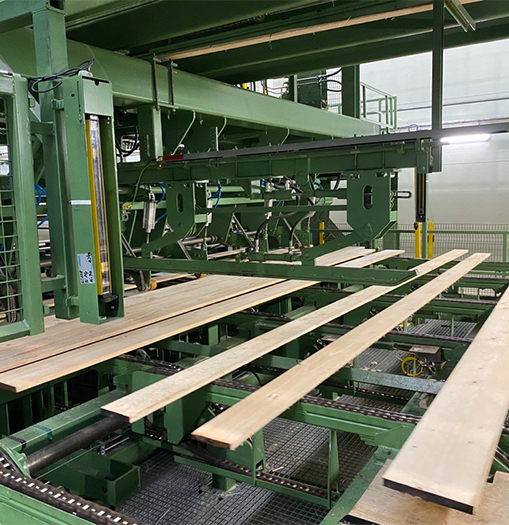

Servo feeder
The boards are transferred as a layer in a controlled manner via an accumulation section to the SPRINGER servo feeder and then fed individually or one after the other to the following cross conveyor or measurement cross conveyor. A key advantage of SPRINGER’s servo feeder is that the machine can adapt automatically and efficiently to the sizes of each board in a gentle way.
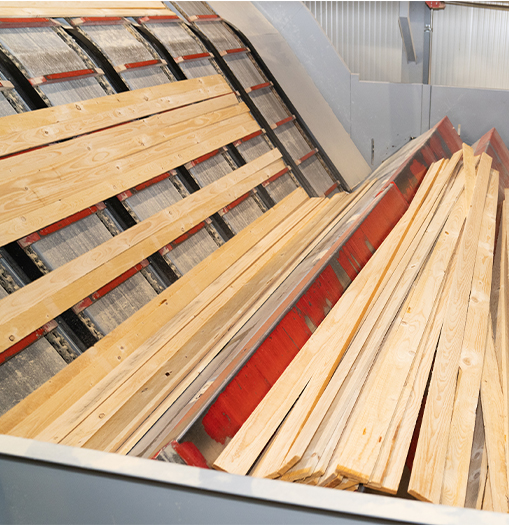
Step unscrambler
SPRINGER’s step unscrambler makes it possible to align and pre-separate thin and narrow boards in front of the unscrambler. In systems where a diverse range of wood sizes are sorted, the step unscrambler can also be optionally bridged, so that large sizes can still be fed directly to the unscrambler.
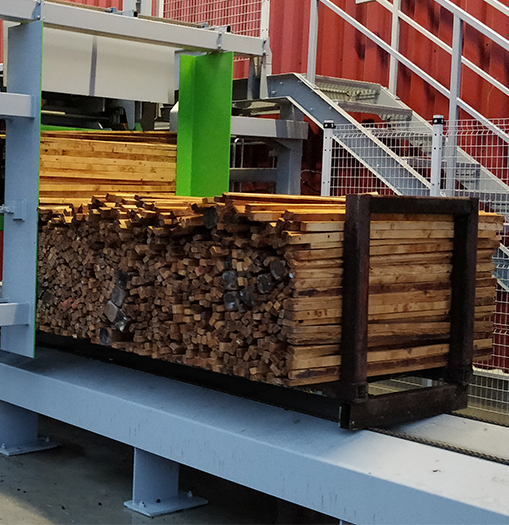
Fully automatic stick reject system
With SPRINGER’s automatic stick removal system, the sticks slip onto a conveyor belt after unstacking and are transferred to the subsequent stick cross conveyor. Pushers at the side align the sticks, which are then collected in the stick bins. Once the stick bin is full, it’s picked up by the forklift truck. The next stick bin, which is in a waiting position, automatically proceeds to the filling position.
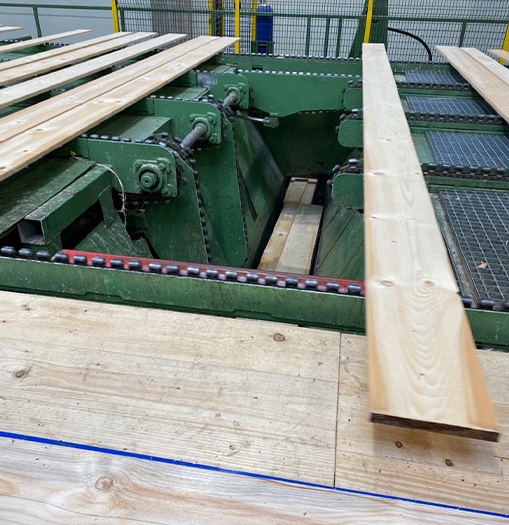
Broken stick system
Boards that don’t comply with quality standards or could cause disturbances in further transport are removed manually. To eject the rejects from the layer of boards quickly without speed reduction or stops, the conveyor arms can be swung down individually, depending on the length of the wood.
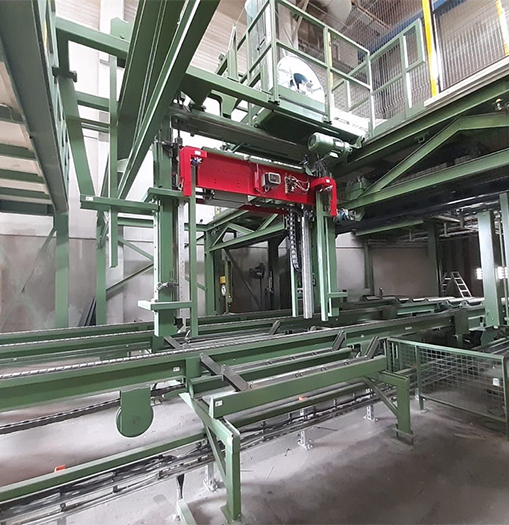
Transverse strappers
The strapping device on the SPRINGER transverse strapper is positioned on a moveable frame and can be moved to each strapping position. Stationary infeed rails are fitted to the bottom so that the strapping can also easily be threaded through the bottom of the package.
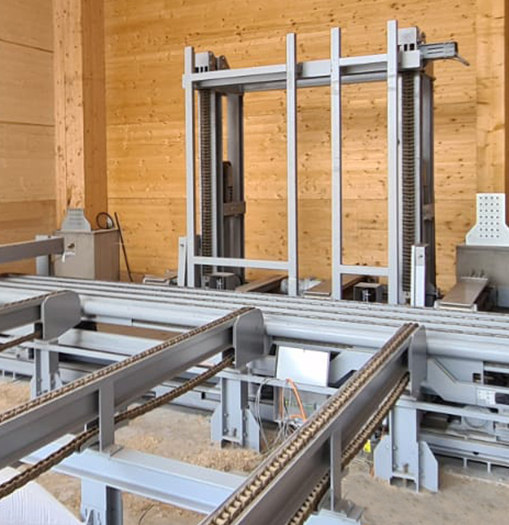
Package stacker
The number and position of the strappings can be selected flexibly, and the dispensing system for the strapping band can be expanded with a multiple dispenser or a dispenser with a vertical band reel. In combination with the downstream transverse package conveyor, the package stacker can provide up to four packages for pick-up.
Shipping packages as well as drying kiln stacks can also be stacked on top of each other for forklift pick-up.
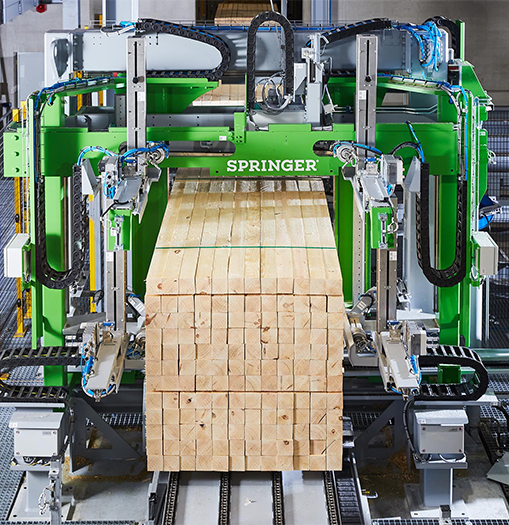
Paketpresse Pascal
The PASCAL package press lies at the heart of SPRINGER packaging lines. It excels due to its superior productivity and low maintenance requirements. It’s currently the fastest package press on the market.
By using different strapping heads, SPRINGER’s package press can be custom adapted to customer requirements. Additionally, the package press can be upgraded to include a dunnage insertion device, with integrated lengthways cutting and automatic application of edge protection, as well as IPPC labeling.
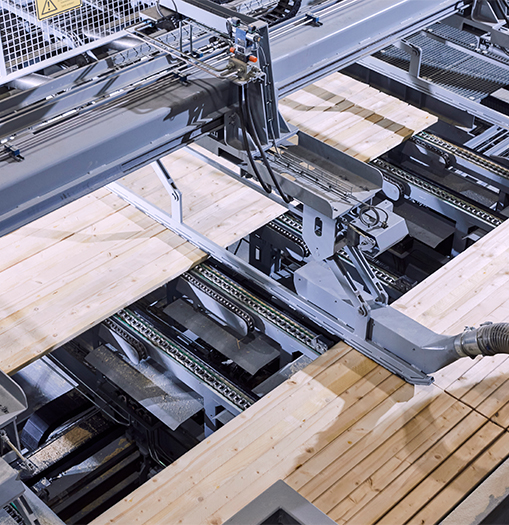
X-PAK 3000
SPRINGER’s new multi-layer cutting solution combines both cutting and packing in one component. As a result, each of the sections can be produced seamlessly starting at a minimum length of 800 mm (32″).
SPRINGER’s X-PAK 3000 stands apart for its ability to adjust the whole device, from the point at which timber is cut until the forks of the stacker. This eliminates all transfer points, resulting in a very smooth and stable process.
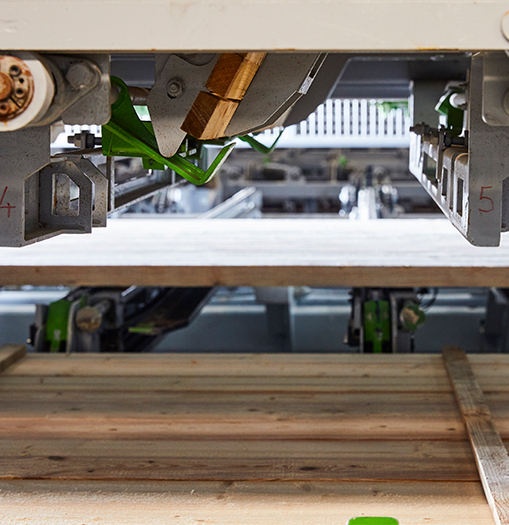
Stick placer systems
SPRINGER’s stick placer systems are fully automated, low in maintenance, and can be integrated into existing third-party machinery.
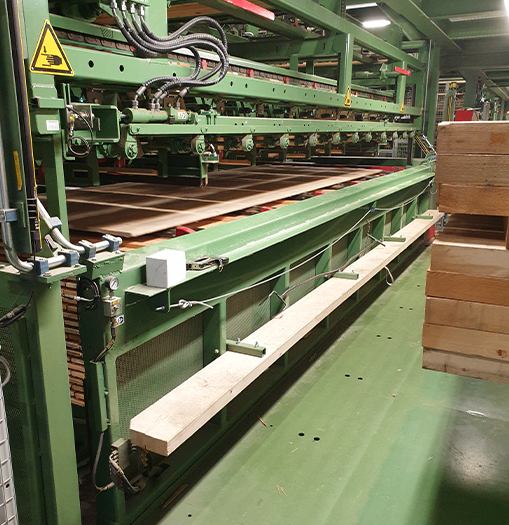
Bundling
SPRINGER packing systems and bundlers guarantee smooth material flow. When a stack and pack width can be varied, SPRINGER’s bundling solution allows single layers or boards to be bundled in a stack or pack. Layer cross-cutting or multi-layer cross-cutting, fully automatic stick laying, or stick laying with stick magazines that can be filled manually can also be integrated.
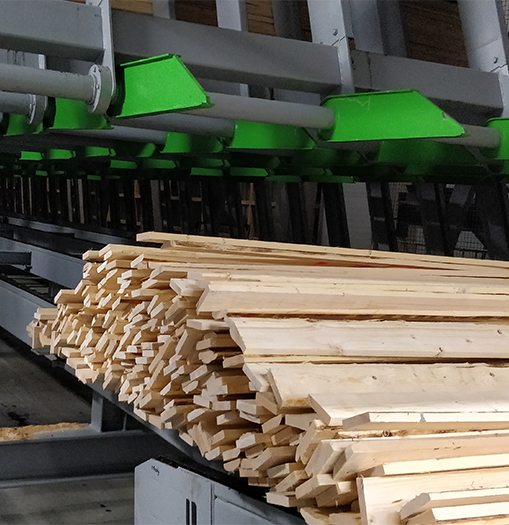
Sorting systems
Efficient and material-friendly: SPRINGER timber lines are used for pre-sorting directly after the sawmill or for the dry end. SPRINGER has developed different lumber sorting systems for diverse requirements when sorting green and dried timber. In addition to horizontal sorting lines, SPRINGER also offers sorting lines with drop bin systems. Regardless of how the sorting line is designed, the boards are sorted into single bins depending on their sizes and quality.
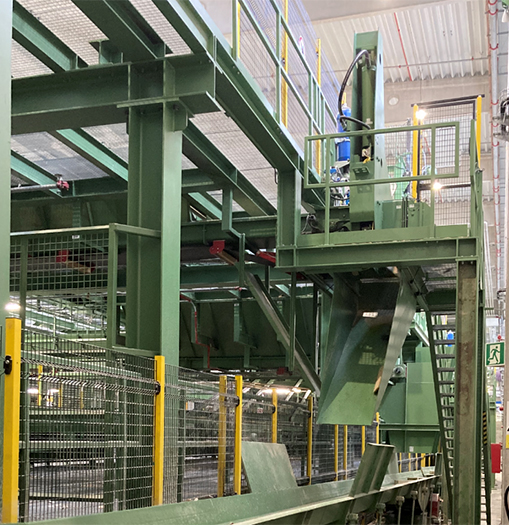
Reject board trimming system
With SPRINGER’s reject board trimming system, poor-quality boards are cut up using a hydraulic blade. This allows for short pieces easily to be fed to a chipper or container.
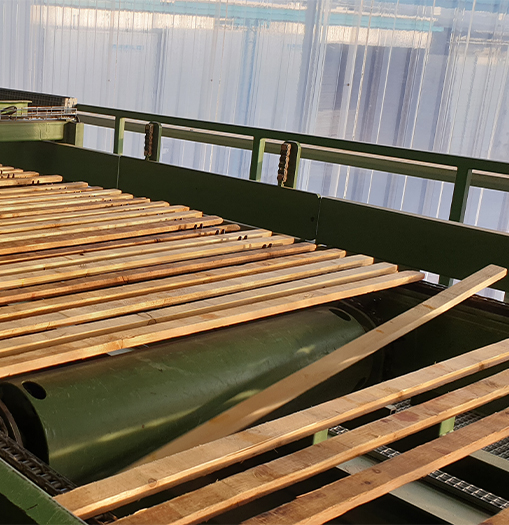
Fully automatic stick handling systems
SPRINGER’s fully automatic stick handling system automatically rejects short, broken sticks and sticks that don’t comply with measurement and shape tolerances before the sticks are fed to the fully automatic stick laying machine. An infeed belt moves sticks that are too short and these fall between the conveyor arms and onto a stick conveyor belt underneath, without any manual intervention. Sticks that don’t comply with the corresponding tolerances are detected and removed from the conveying process in a controlled way.
Customized support
As a family business, personal contact with our customers is our top priority. Our sales staff will be happy to advise you to find the best solution for your needs. Our sales representatives are happy to advise you to find the best solution for your needs.